
H&H Menifee Concrete WorksH&H Menifee Concrete Works(951) 574-0417

Concrete Contractor in Homeland, CA - Driveways and Patios on a Packed Base

H&H Menifee Concrete Works is a concrete contractor based in Menifee that pours driveways, patios, stamped concrete, walkways and foundations for homeowners in Homeland, CA. I come out to look at your job, and our crew does the work.

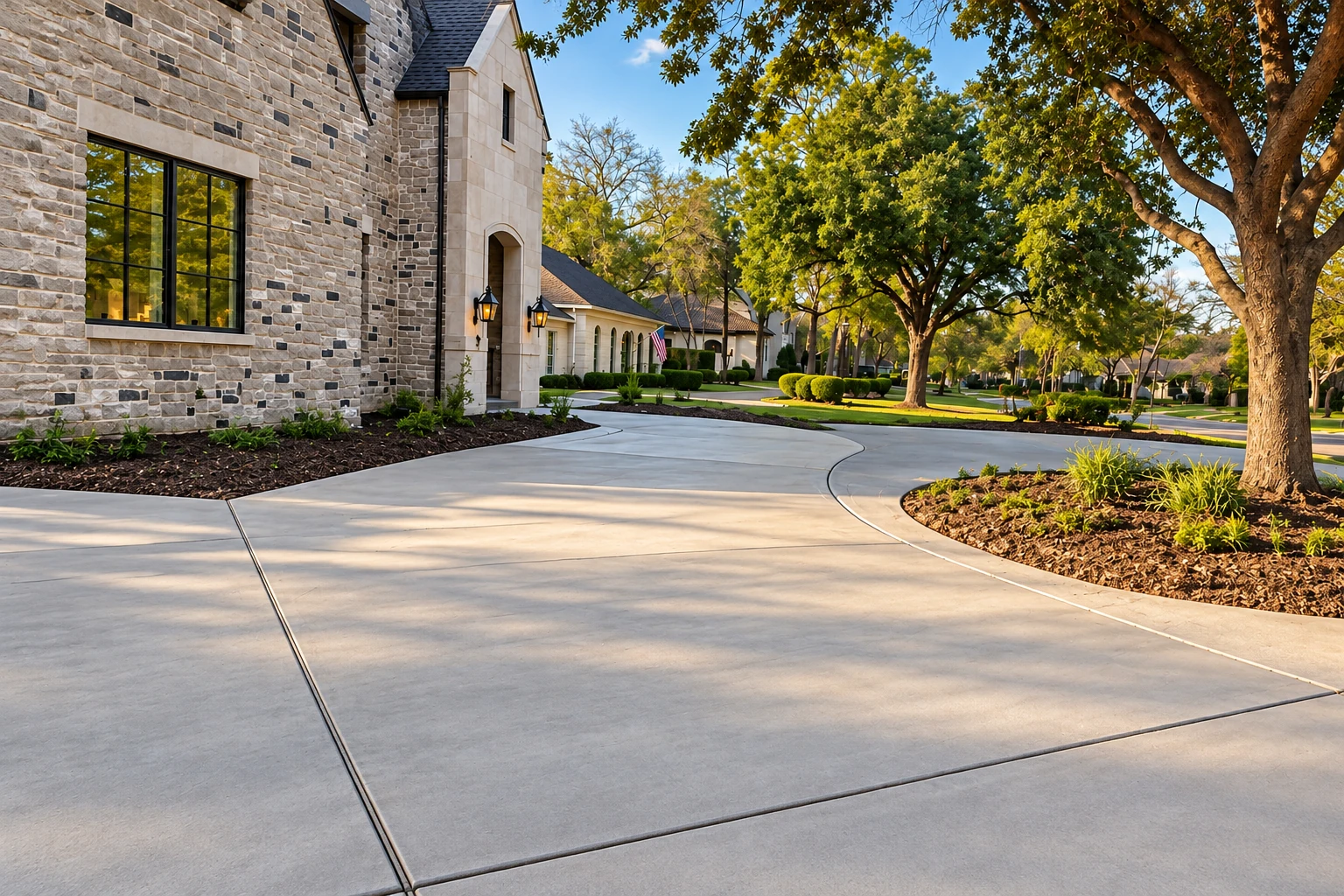
A broad, light-gray concrete driveway curves beside a stone-faced building and landscaped beds beneath mature trees.

Homeland runs through the county, not a city hall

Homeland is one of the unincorporated communities in Riverside County's Third District, so there's no city government here. The county's Board of Supervisors sets the zoning, and we come over from Menifee for Homeland jobs the same way we do for Nuevo and Perris.

Across the cities we serve, most calls are about a driveway that's cracked or sinking, a patio where water pools by the back door, or a new slab for a garage or shop. Houses and lots vary a lot, so I don't assume anything about the ground until I've seen it, because what's under a slab and where the water runs decide whether it stays flat or settles with the dirt.

Concrete work we do for Homeland homes and lots

We do the full range of concrete work in Homeland. That covers flatwork, which is what contractors call driveways, patios, walks and other slabs on the ground, along with foundations, footings, retaining walls and the cutting and raising jobs that come up with older concrete. Each job gets planned before anyone picks up a shovel. I come out myself, and we settle the base, the thickness and where the joints go before our crew sets a single form.

  • Concrete driveway building

    A driveway that's cracked or sinking at the edges usually sat on a thin, loose base. We dig out, pack the ground and pour a new slab with planned joints.

    Explore service
  • Concrete patio construction

    Bare dirt behind the house turns to mud when the yard drains toward your walls. We pour a patio that slopes the other way, so water runs off instead of pooling.

    Explore service
  • Stamped concrete services

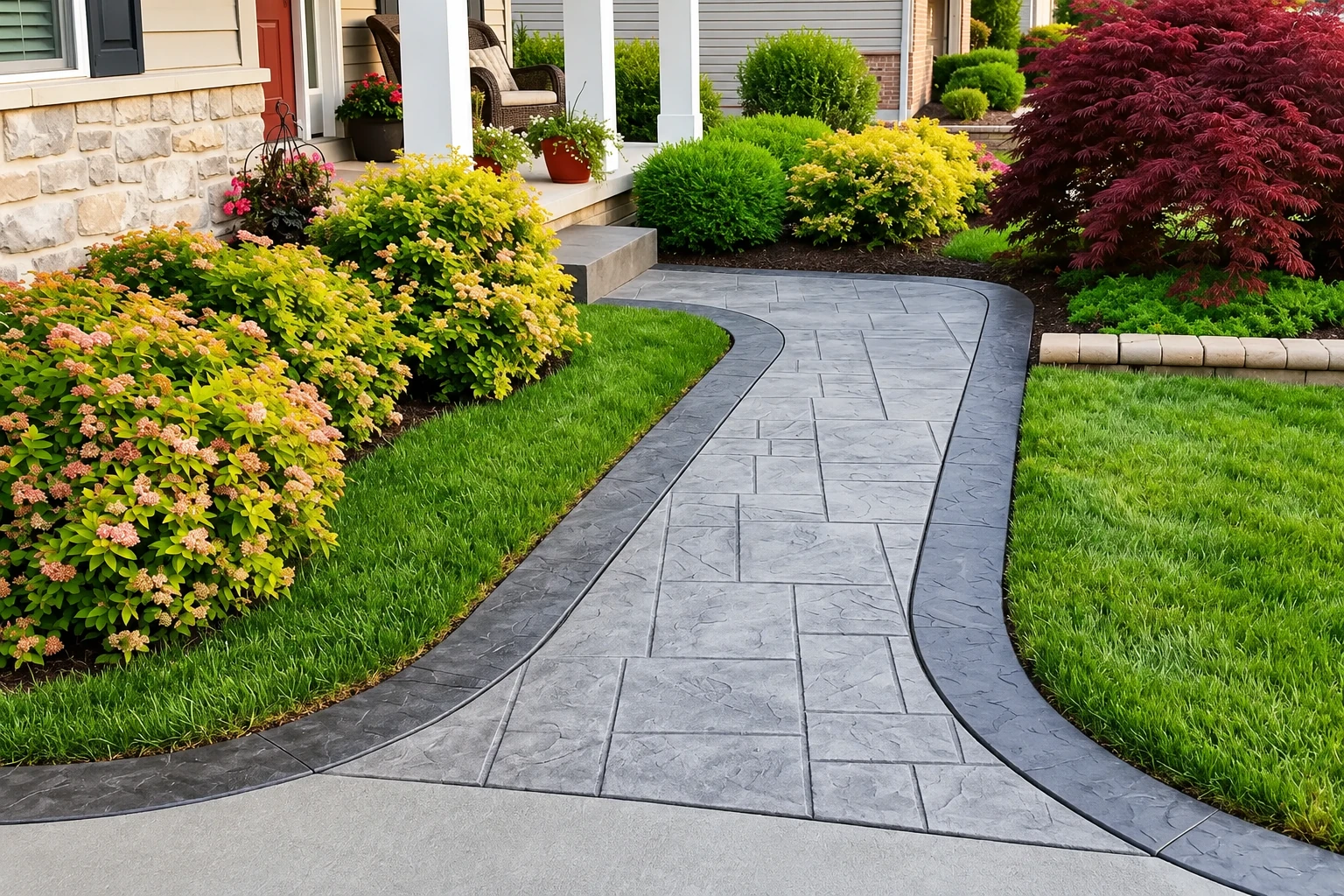
    Stamped concrete gives a patio or front walk the look of stone or brick without the loose joints of pavers. We press the pattern in while the surface is soft, then seal it.

    Explore service
  • Concrete sidewalk building

    Side walkways and front paths crack and lift when roots and water work under them. We pour new walks on a packed base with a slight slope, so they stay level underfoot.

    Explore service
  • Garage floor concrete

    A garage floor carries car weight and oil drips, so a cracked one wears fast. We pour a new floor with rebar, the steel bars that hold a slab together if it cracks.

    Explore service
  • Decorative concrete

    Color or a scored pattern can tie an entry or patio to the house better than plain gray. We add the color in the mix or work the surface by hand, then seal it.

    Explore service
  • Concrete retaining walls

    When a slope pushes dirt onto a patio or driveway, a wall has to hold it back. We build concrete retaining walls on a footing and give water behind them a way out.

    Explore service
  • Concrete floor installation

    Shops, workrooms and additions need a concrete floor that's flat and strong enough for what goes on it. We prep the ground and pour a floor sized for the load.

    Explore service
  • Concrete pool decks

    Pool decks take wet feet, chlorine and hot sun, so a slick or cracked deck gets risky. We give the new deck a textured finish for grip and slope it so water drains away.

    Explore service
  • Concrete steps construction

    Front and back steps that rock, crumble or rise unevenly are easy to trip on. We form and pour new steps with even rises and a finish that grips when wet.

    Explore service
  • Slab foundation building

    A new garage, workshop or addition needs a slab on solid, packed ground, because everything above it moves if the slab does. We grade, pack the ground and pour to your plans.

    Explore service
  • Foundation installation

    A foundation carries a building's weight down to firm ground, and it has to be right before any framing goes up. We dig the trenches, set the steel and pour to your project's drawings.

    Explore service
  • Concrete parking lot building

    A dirt or broken lot at a shop or rental means dust, potholes and puddles after rain. We pour larger slabs, thicker where trucks turn, with a slope that moves water off.

    Explore service
  • Concrete footings

    Patio covers, decks and block walls stand on footings, concrete pads that spread the weight into the ground. We dig to the depth the plans call for and pour each one square.

    Explore service
  • Foundation raising

    When one corner of a house has dropped, doors stick and cracks open across walls. We raise the settled section back toward level and look at why it sank.

    Explore service
  • Concrete cutting

    Sometimes a pipe trench or a damaged section has to come out without breaking up the whole slab. We saw-cut clean, straight lines so the new concrete ties into the old.

    Explore service

What to know before a concrete job in Homeland

Homeland is run by the county, so the permit office and the inspector come from there instead of a city. Here's what that means for a concrete job, and what decides your price and your dates.

County permits and the licenses to check

Permits for Homeland come from the County of Riverside. A division of the county's Transportation and Land Management Agency issues them for new construction in unincorporated areas and runs the grading, plan checks and building inspections for that work. When your job needs a permit, the pour waits on that review and the inspector, so the county's calendar can set the start date.

Two things are worth checking on any contractor you hire here. Ask for their California contractor license, and since the county has no business license program, ask whether they hold the county's business registration for stormwater, which state-licensed contractors working in unincorporated areas are required to get. We're fully licensed and insured, and when a job needs a permit, we handle the application and set up the inspections.

  • We check which office covers your address, the county or a city.
  • If your job needs a permit, you hear about it before work starts.
  • We set up the county inspections so you don't have to.

What sets the price and the dates

The price mostly comes down to size, thickness and how much ground work sits under the slab. Soft or uneven dirt means more digging out and packing, breaking out old concrete adds haul-off, and stamped or colored finishes cost more than a broom finish, the plain swept texture that gives feet and tires grip. I measure and write it all up, so you can see what's included.

The schedule turns on the permit if there is one, the weather and the curing. Curing is the wait while concrete hardens enough to take weight, and rushing it is how a good slab gets marked up or cracked early. You can walk on new concrete well before you can drive on it, and I'll tell you both dates before we pour.

  • Thicker slabs and more steel cost more but carry heavier loads.
  • Stamped and colored finishes add hand work and a sealing step.
  • Wind, heat or rain in the forecast can move a pour date.

Get a free on-site concrete estimate in Homeland

We reply within one business day to set a time, and then I come out to your Homeland property myself. I measure, look things over and write up a free estimate so you can see what's included, with no pressure and no obligation to book.

(951) 574-0417

What we look for on a Homeland property

Most of what makes a slab last gets decided before the concrete truck arrives. These are the things I look at on a Homeland property, and what our crew does about each one.

  • Santa Ana winds on pour day

    Riverside County gets hot, dry Santa Ana winds every year, and the blown sand and soil can wear down building materials and damage unfinished work. Fresh concrete counts as unfinished work for a while, so we watch the forecast, and we'd rather move a pour than finish a slab with grit blowing across it.

  • Where the water goes

    A patio or driveway that falls toward the house sends every rain straight at your walls and foundation. Before we set forms, I check how water moves across the lot today, and we pitch the new slab so it drains away from the house and toward a spot that can take it.

  • Pouring before the afternoon heat

    Concrete poured in midday heat dries too fast on top, and that usually shows up later as a weak, dusty surface that wears and flakes. We schedule pours for the cooler part of the morning, so our crew has time to work the surface properly before the sun gets on it.

  • Joints that decide where cracks go

    Concrete shrinks as it cures, and some cracking comes with the material. Control joints are the straight grooves we cut into the slab so it cracks along them instead of across the middle. We cut them on time and plan where they fall, because late or skipped joints leave cracks wherever the slab chooses.

  • Old slabs that sank or cracked

    When an old driveway or patio has sunk or split, the cause is usually underneath it, in a loose base or water running where it shouldn't. I look at why the old slab failed before we price the new one, so we fix the cause instead of pouring over it.

Why hire H&H Menifee Concrete Works in Homeland

I ran a small landscaping business before this, and the concrete jobs were the ones I liked best. Here's how we run a job now and why it's built the way it is.

We spend the budget on the base first

On the day we pour, nobody can see the base. It's the packed layer under the slab, and it's usually the first thing that gets cut when a budget's tight, because a slab on a thin base looks just as good that first week. Later on, the cheap base is the one that settles, and the slab cracks and sinks with it.

So if something has to give, I'd rather you go with a plain broom finish on a well-packed base than stamped concrete on a weak one. A sound slab can get color or a sealer later, but the ground under it can't be fixed without breaking the slab out. Call (951) 574-0417 or use the form, and I'll go over it with you on site.

  • Licensed in California and insured

    We're fully licensed and insured for the concrete work we do in Homeland. Before you sign with anyone, ours included, ask to see the contractor license and the insurance, because it's the quickest way to tell a real contractor from someone with a mixer.

  • The owner writes your estimate

    I come out myself to look at the job and write the estimate, so the person pricing your driveway is the one who'll be running the pour. Our crew does the forming, pouring and finishing, and I'm on site running the work.

  • Questions answered before the pour

    I'd rather explain why concrete cracks before the job than after it, and I'd rather answer ten questions up front than leave you guessing. Before we pour, you'll know how thick the slab is, what's going under it and where the joints will go.

  • In business since 2017

    We've been in business since 2017, and we're best known for driveways, patios and stamped work. We're based in Menifee and work in the cities around it across southwest Riverside County, mostly for homeowners, plus property owners who need bigger slabs.

Questions about concrete work in Homeland

These are the questions that come up when you plan concrete work in an unincorporated part of the county. If yours isn't here, call (951) 574-0417 and I'll answer it straight.

How do I find out if my driveway or sidewalk in Homeland needs a permit?

Start with the county's building ordinance, which lists driveways and sidewalks no more than 30 inches above the ground beside them among work that doesn't need a building permit. That holds only when there's no basement or room under them and they aren't part of an accessible route, a path built for wheelchair access. Exempt work still has to meet the code, so check the current rules with the county building office, and we check which office covers your address before we start.

How tall can a retaining wall be in Homeland before it needs a permit?

The county's building ordinance puts retaining walls not over 4 feet, measured from the bottom of the footing to the top of the wall, on its exempt list. That changes if the wall holds back extra weight above it, like a slope or a driveway, or holds back flammable liquids, and block walls over 4 feet don't get the ordinance's fence exemption. If your wall needs a permit, we handle the application and the inspections.

How do I know if my concrete contractor needs a California license?

In California, a contractor needs a current state license if the job requires a building permit, if they use employees, or if labor and materials together come to $1,000 or more. Ask for the license number on any bid and look it up with the state licensing board before you sign.

How should a concrete slab in Homeland be built with earthquakes in mind?

Build it to the code the county enforces, with the steel and footings the plans call for. The county's building ordinance finds that the San Andreas and San Jacinto faults cross Riverside County, with many smaller faults besides, and that a good share of building here is likely to be affected by earthquakes. On foundations and bigger slabs, we pour to the approved drawings and place the rebar where they show it.

What affects the cost of a concrete driveway or patio in Homeland?

Size, thickness, the ground work under the slab and the finish you pick set most of the cost. Beyond those, a permit adds the county's review and inspections when your job needs one, and a spot the concrete truck can't reach means pumping or hand work. My estimate puts your own number on it.

Service areas

We're based in Menifee and work across southwest Riverside County, including Nuevo, Perris, Mead Valley, Lake Elsinore and the other cities listed here. If your address isn't on the list, call (951) 574-0417 and ask.

Ask about your location
(951) 574-0417Get an estimate