
Foundation raising in Menifee, CA - a house lifted back toward level and held there
Stair-step cracks, sloping floors or doors that stick? We find out why your house moved, then set the steel piers that suit it.
Is my house settling, and can it be lifted back to level?
Foundation raising in Menifee means setting steel piers in the ground beside your house, each with a steel bracket under the footing, so the house can be lifted back toward level and supported against more settling.
Most people call after they notice something, like a crack that steps across the foundation, a floor that slopes or a door that started sticking. Those signs can come from a house sinking into the ground, and they can also come from ground pushing the house up, so I look before I say anything about how to fix it.
The price mostly follows how many piers the job takes and how deep they have to go to reach firm ground, and the schedule mostly follows the city's permit review. Your estimate lays out each part of the work so you can see what's included before you decide.
- Steel piers along the part of the footing that moved, each with a bracket carrying the foundation.
- Push piers or helical piers, depending on how heavy your house is and how its footing is built.
- A look at drainage and soil around the house, since water usually plays a part in movement.
What happens when you call us about foundation raising in Menifee?
Here's how a foundation raising job goes with us, from the first call to the walk-through. I do the looking and the estimate myself, and our crew does the pier work with me on site.
Tell us what you're seeing
Call (951) 574-0417 or send the form, and tell us where the cracks are, which floors slope and which doors or windows stick. We'll get back to you and set a time for me to come out.
I inspect and write it up
I measure, look at the cracks, the floors and how water drains around the house, and talk through what you want. Then I write an estimate that shows each part of the work, so you can see exactly what you're paying for.
Permits before any work starts
Once you say yes, we file the permit and set up the inspections, and you'll hear about it from me before anything starts. The city estimates 14 business days for the first plan review and 10 for any later review, and inspections at key stages have to pass before the final one.
Lift the house, then walk it
Our crew sets the piers and brackets under the footing and lifts the house back toward level, with me running the work on site. Then I walk the finished job with you, and it's satisfaction guaranteed on every job.
Foundation repair, footings and the concrete work around them
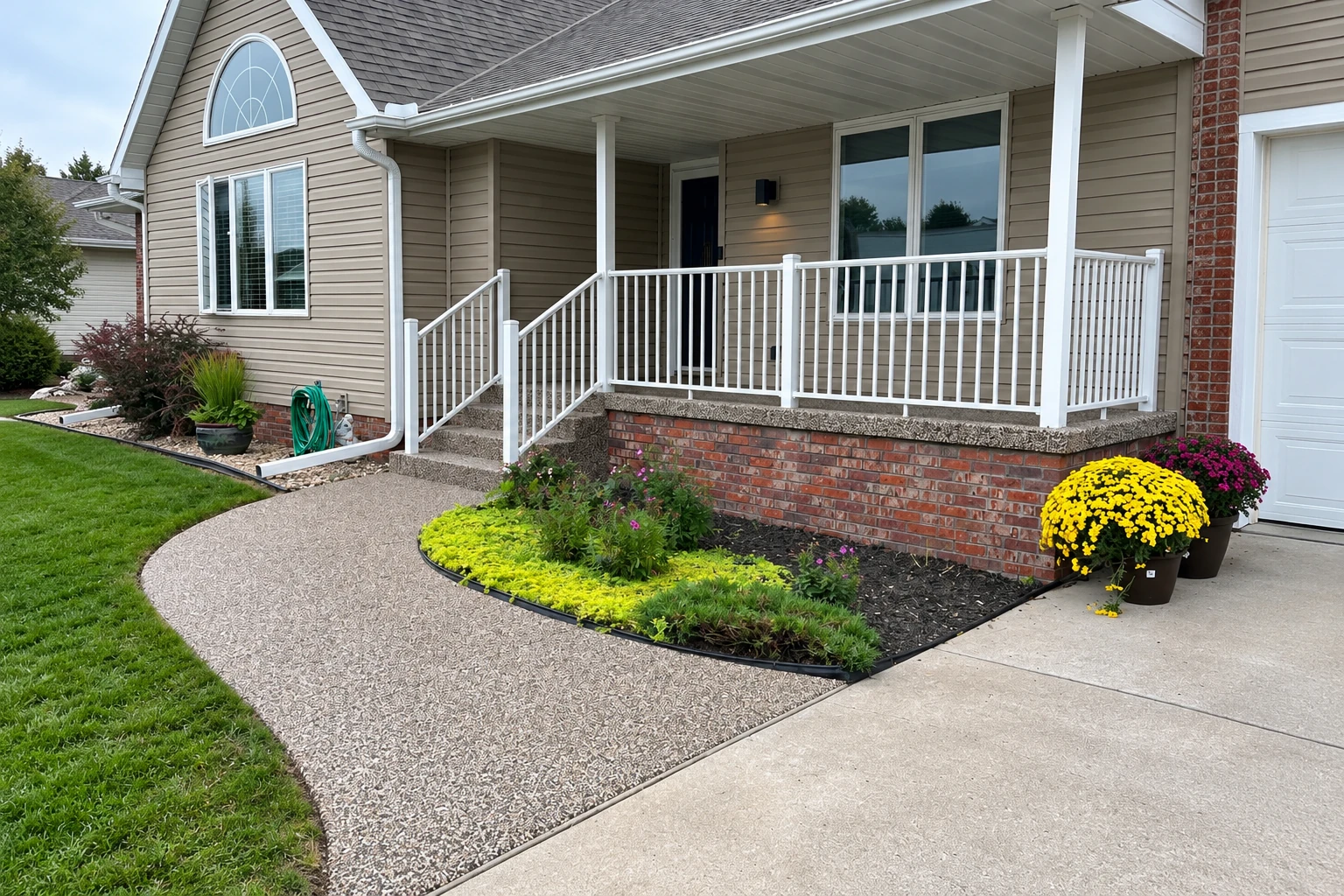
These photos show the kind of foundation and concrete work this trade involves, from piers and footings to the slabs that sit beside a house. They're examples of the work, not pictures of a particular job.
Concrete sidewalk winding through a landscaped front yard toward a detached garage and driveway.
A gray stamped concrete patio with a textured stone pattern meets three concrete steps beside a landscaped house.
A broad, light-gray concrete driveway curves beside a stone-faced building and landscaped beds beneath mature trees.
A wide exposed-aggregate concrete driveway with expansion joints leads to a large home with two garage doors.
Decorative concrete patio with large tan stamped tiles, pergola, outdoor seating, and a stone fireplace.
A curved stamped concrete walkway with dark borders winds through a green garden toward a house porch.
Get your foundation looked at and a written estimate
Tell us where you see cracks, sloping floors or sticking doors, and we'll reply within one business day to set a time. I'll come out, look the house over and write a free estimate, with no pressure and no obligation.
(951) 574-0417Questions Menifee homeowners ask about foundation raising
These are the questions people in Menifee ask me most about settling houses and piers. If yours isn't here, give us a call, since I'd rather answer it up front than leave you guessing.
How do I know if my foundation is settling?
The usual signs are cracks through the foundation walls that run straight up, on a diagonal or in a stair-step pattern, along with floors that aren't level, doors and windows that stick, and cracks in drywall or other interior finishes. Write down where each one shows up before you call, because that tells me which part of the house moved.
What causes a house foundation to sink in Menifee?
Usually it's the ground under the footing, either soil that settles or clay that swells and shrinks as it gets wet and dries out. The city says the Salt Creek and Warm Springs Creek floodplains and parts of the Paloma Wash Valley are thought to have soils that could liquefy in an earthquake, and soil that liquefies can stop holding a house up so it sinks or tilts. That's why I look for the cause before we talk about piers.
How much does foundation raising cost in Menifee?
There's no set price, because the cost comes down to how many piers your house needs and how deep they go before they reach firm ground. A long wall that dropped, deep soft soil, tight digging room beside the house or a slab that has to be cut all push it up, while a single corner that settled keeps it lower. I come out and write it up so you can see each part before you decide.
What is the best way to keep my foundation from moving again?
Keep the water around your house under control, because steady moisture and good drainage cut down how much clay soil swells and shrinks, and most of that is in your hands. Point downspouts away from the house, keep the ground sloping away from the foundation and don't let sprinklers soak the same wall every day.
Do you have to dig around my house to install foundation piers?
Yes, there's usually a small hole at each pier spot, dug deep enough to expose the footing so the bracket can sit under it. Plan on digging along the side of the house where the piers go, with the holes filled back in once the lift is done.
Does a contractor need a state license to raise a foundation in California?
Yes, California requires a Contractors State License Board license for anyone who builds or alters a building or structure when the job needs a building permit, uses hired workers or runs $1,000 or more in labor and materials. Raising a house foundation usually meets at least one of those, so ask any contractor you're considering about their license. We're fully licensed and insured.
Foundation raising in Menifee and the cities around it
Menifee's Building & Safety Department issues permits for repairs to a house, so we check whether the city or county covers your address and handle the permit. We see the same sloping floors and stair-step cracks in Murrieta and Wildomar.